You’ve sat through three quarters on hard bleachers. Your back aches. Your legs are numb. Picking the wrong portable stadium seat ruins every game day.
The right portable stadium seat depends on your priorities: back support, portability, padding, and bleacher compatibility. Match the seat to your typical venue type, how far you carry it, and how long you sit. Most buyers find a padded seat with a foldable backrest covers 90% of use cases.
Choosing a stadium seat sounds simple. But there are dozens of styles, and the wrong pick means carrying dead weight to every game. The sections below break down each decision point so you can buy once and buy right.
What Types of Portable Stadium Seats Are Available?
You walk into a sporting goods store and see ten different stadium seats. They all look similar. But the differences matter more than you think.
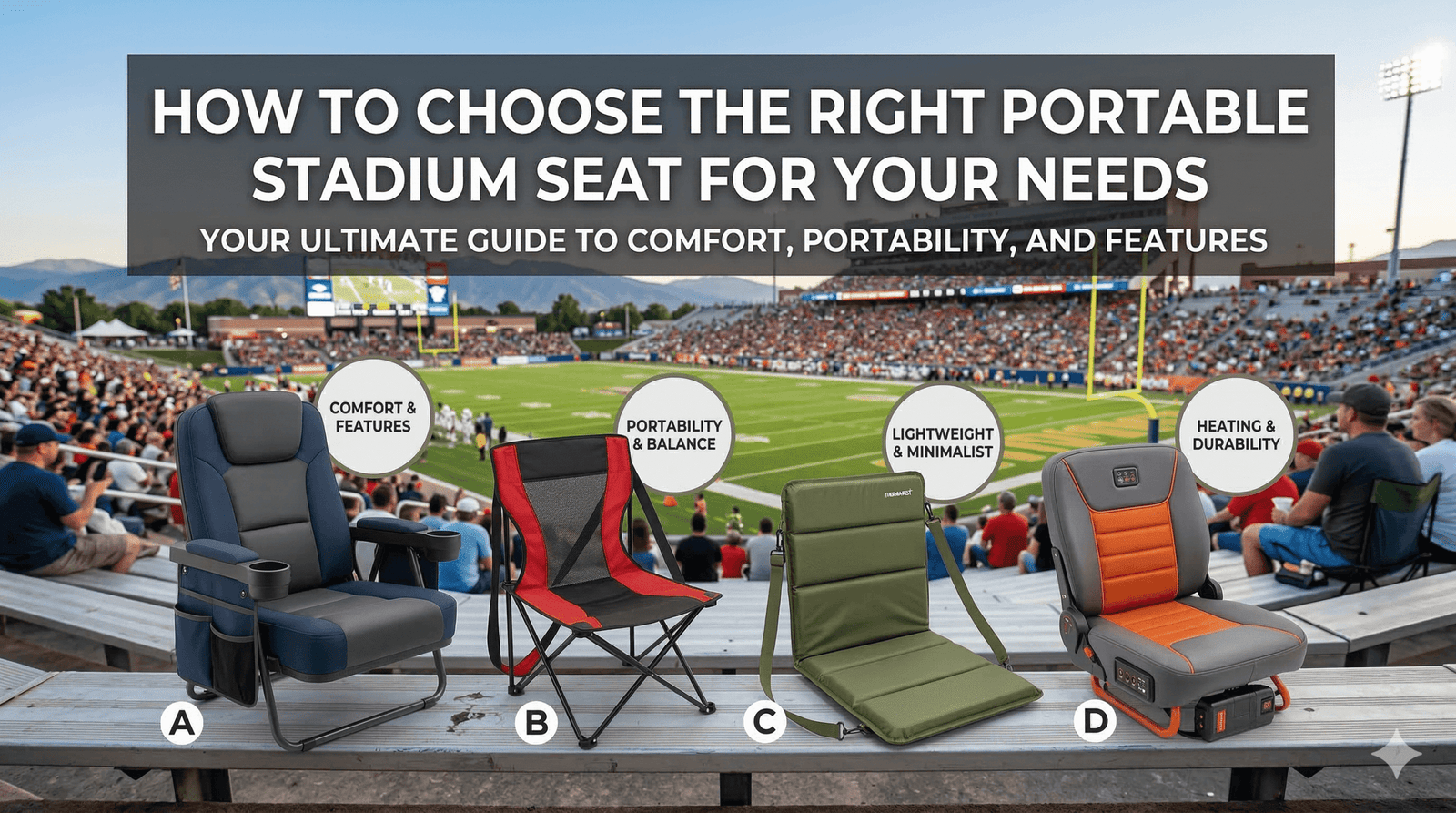
Portable stadium seats generally fall into four categories: backless bleacher pads, low-back chairs, high-back support seats, and stadium chairs with armrests. Each type suits a different situation. Backless pads are lightest. High-back seats offer the most support but weigh more and take up more space.
Breaking Down Each Type
Understanding each category helps you rule out the wrong options fast.
Backless Bleacher Pads
These are foam or gel cushions with no frame. They fold flat or roll up. They weigh almost nothing. You get basic cushioning but zero back support. These work best for short events or venues where you stand more than you sit.
Low-Back Stadium Seats
These have a short backrest, usually 10–14 inches tall. They support your lower back without blocking the view of the person behind you. They fold flat and attach to bleachers with a hook or strap. Most buyers in this category are happy with the balance of comfort and packability.
High-Back Support Seats
These are the most comfortable option for long games. The backrest can reach 18–22 inches. Some include lumbar cushions or padded armrests. The trade-off is size and weight. Expect 3–5 lbs instead of 1–2 lbs.
Stadium Chairs with Armrests
These feel closest to an actual chair. They sit on top of bleachers rather than hooking onto them. Some include cup holders and side pockets. They are the heaviest and bulkiest option.
| Type | Weight | Back Support | Best For |
|---|---|---|---|
| Backless Pad | Under 1 lb | None | Short events |
| Low-Back Seat | 1–2 lbs | Low | Most fans |
| High-Back Seat | 3–5 lbs | High | Long games |
| Chair with Armrests | 4–7 lbs | Full | Premium comfort |
[Read more: best portable stadium seats for long games]
If you want the best balance of comfort and portability, a quality low-back or high-back folding stadium seat covers most game day needs without the bulk of a full chair.
How Do You Know If a Stadium Seat Will Fit Your Bleachers?
You buy a seat online. It arrives. You get to the stadium and the hook won’t grip the bleacher. You sit on cold metal anyway. That’s a problem with a simple fix.
Most portable stadium seats use a bleacher hook system that works on benches 1.5–3 inches thick. Before buying, check your typical venue’s bleacher depth. Some seats also feature non-slip rubber bases for venues without bleacher edges, like gym floors or aluminum benches.
Measuring for the Right Fit
Not all bleachers are the same. Here is how to avoid a mismatch.
Step 1: Identify your venue type.
Wood bleachers, aluminum stadium benches, and gymnasium floors all have different surfaces. Wood bleachers usually have a defined edge. Aluminum benches may be smooth and harder to hook onto. Gym floors need a rubber base.
Step 2: Measure bleacher thickness.
The standard hook on most portable stadium seats fits bleachers between 1.5 and 3 inches thick. If you attend games at multiple venues, look for seats with adjustable hooks or universal mounting systems.
Step 3: Check the seat width.
A seat that is too narrow is uncomfortable. A seat that is too wide won’t fit between other fans. Most stadium seats run 17–19 inches wide. That matches standard bleacher spacing at most venues.
Step 4: Look at the base.
For venues with no edge to hook onto, a non-slip rubber base keeps the seat from sliding. Some premium seats include both a hook and a rubber base, making them truly universal.
| Venue Type | Recommended Mount |
|---|---|
| Wood bleachers | Bleacher hook |
| Aluminum benches | Adjustable hook or rubber base |
| Gym floors | Rubber non-slip base |
| Grass or turf | Standalone folding legs |
[Read more: stadium seat sizing guide for different venues]
Getting the fit right is half the battle. Once you know your venue, look for a portable stadium seat specifically designed to work on that surface.
What Padding and Back Support Features Should You Look For?
You can sit for 20 minutes on anything. After two hours, your back and tailbone have a much stronger opinion about what you’re sitting on.
For long games, look for stadium seats with at least 1.5 inches of foam or gel padding on the seat base. Lumbar support and a padded backrest add meaningful comfort for events over 90 minutes. Memory foam seats conform to your body but weigh more than standard foam options.
Comfort Features Worth Paying For
Some features look good in product listings but don’t add real value. Others make a noticeable difference from the first quarter to the last.
Seat Padding Thickness
Foam padding under 1 inch compresses quickly and feels thin after an hour. Padding between 1.5 and 2.5 inches holds its shape through a full game. Gel padding stays cooler than foam and adds pressure relief for your tailbone, which is one of the most common pain points on hard bleachers.
Lumbar Support
A contoured backrest that curves inward at the lower back keeps your spine in a neutral position. Without it, you tend to slouch forward. After 90 minutes of slouching, your lower back tightens up. This is especially important if you have an existing back issue or you attend back-to-back games on the same day.
Backrest Padding
A padded backrest is more comfortable than a bare plastic or metal frame. Look for at least half an inch of padding on the backrest surface. Some seats include a padded headrest extension for added support during long events.
Armrests
Padded armrests reduce shoulder tension. They are not essential, but they add comfort for seats in the high-back and full-chair category. The trade-off is always extra weight and bulk.
Temperature and Weather
Gel padding handles heat better than foam. For cold-weather games, some seats include insulated bases that block cold from the aluminum or metal bleacher surface below you. That single feature can make a winter football game much more bearable.
| Feature | Impact | Worth It? |
|---|---|---|
| 1.5″+ foam padding | High | Yes |
| Gel padding | Medium-High | Yes for heat |
| Lumbar contour | High | Yes |
| Padded backrest | Medium | Yes |
| Armrests | Low-Medium | Situational |
| Insulated base | High (cold weather) | Yes in winter |
[Read more: how to pick a stadium seat for back pain relief]
If you watch games longer than 90 minutes on a regular basis, investing in a seat with real lumbar support and adequate padding will protect your back and keep your focus on the game. A well-padded high-back stadium seat handles this combination better than any other type.
How Important Is Portability When Choosing a Stadium Seat?
You have to get the seat from your car to your spot. That walk might be five minutes or twenty. Weight and carry options matter more than most buyers realize before their first game.
A portable stadium seat should weigh under 4 lbs for easy carrying. Look for seats with a shoulder strap, carry handle, or a design that straps to a backpack. The best portable stadium seats fold flat and fit under a standard seat or in a tote bag without taking up the whole space.
What Makes a Stadium Seat Truly Portable?
“Portable” on a product label doesn’t always mean easy to carry. Here is what to actually look for.
Weight
Every extra pound matters after a long walk. Under 2 lbs is ideal for backless and low-back seats. High-back seats should stay under 5 lbs. Anything above 6 lbs starts to feel like a burden, especially if you’re also carrying food, a bag, or a child.
Fold Design
Some stadium seats fold in half. Others roll up. Some collapse with a single snap. The best folding designs stay flat without any pieces sticking out. This matters when you’re squeezing through a crowded row or sliding the seat under a bench.
Carry Options
A shoulder strap keeps your hands free. A carry handle is faster for short walks. Some seats have a clip or carabiner loop so you can attach them to a bag. If you’re also carrying a cooler or a kid, a hands-free carry option is worth looking for.
Packed Size
The folded dimensions tell you whether the seat fits in a tote bag or takes up its own bag. Look for folded sizes under 18 x 14 x 2 inches for the most versatile storage.
Durability of Moving Parts
Hinges, hooks, and straps wear out. Metal hinges outlast plastic ones. Reinforced stitching on straps prevents early fraying. Check product reviews specifically for comments on how the seat holds up after a full season of folding and unfolding.
| Feature | What to Look For |
|---|---|
| Weight | Under 4 lbs |
| Fold design | Flat, no protruding parts |
| Carry method | Shoulder strap or handle |
| Packed size | Under 18 x 14 x 2 inches |
| Hinge material | Metal preferred |
A durable, lightweight stadium seat with a shoulder strap gives you full comfort at the game without the hassle of hauling extra gear. Look for models that specifically list their packed dimensions so you know what you’re getting before it ships.
Conclusion
Match your seat to your venue type, event length, and how far you carry it. Prioritize padding and lumbar support for long games, and check bleacher compatibility before you buy. The right portable stadium seat changes every game day for the better. Find yours and stop sitting on bare metal.