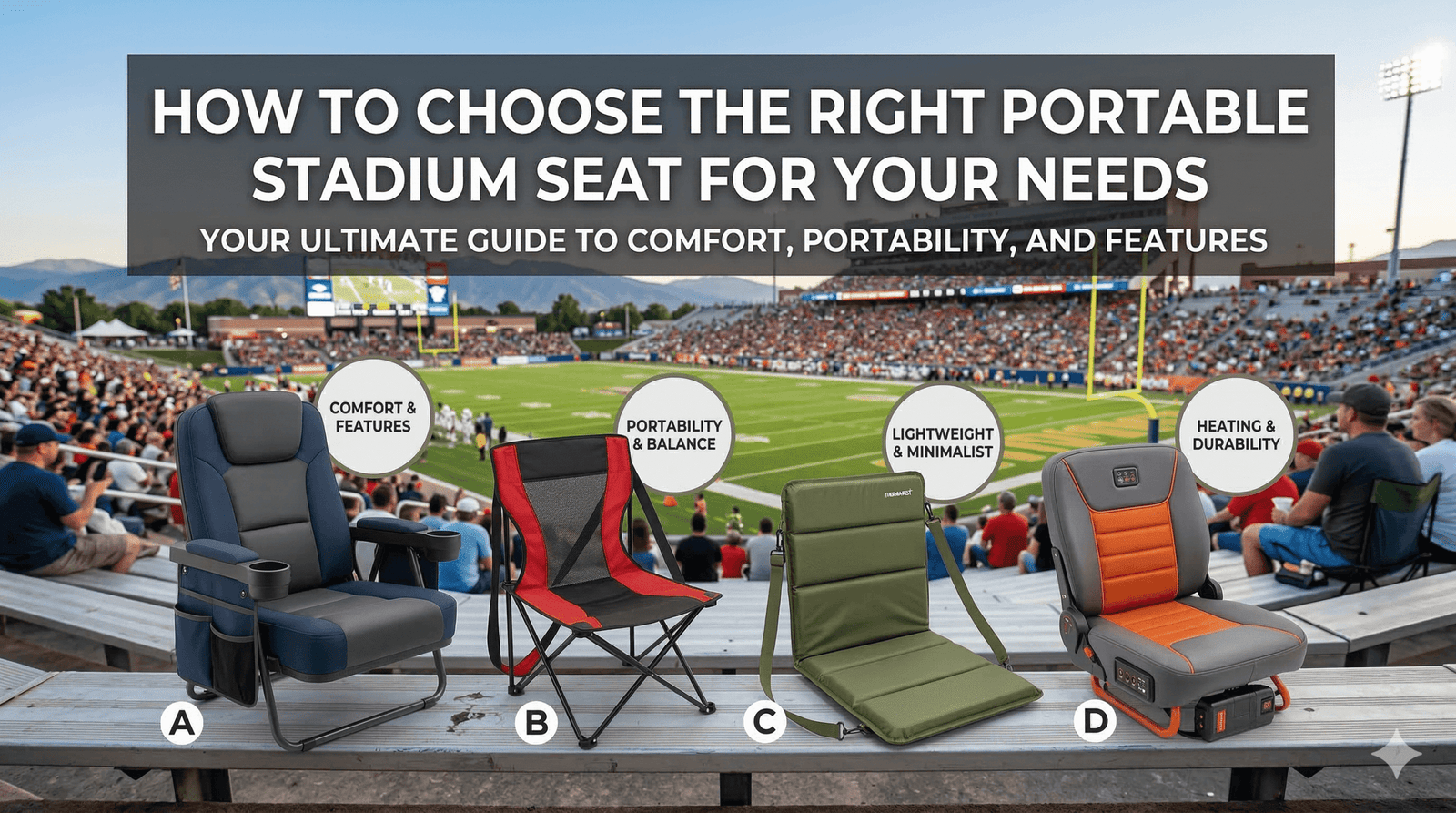
Are you tired of sitting on hard bleachers for hours? Back pain and discomfort can ruin any live event experience. You deserve better.
Stadium seats are specialized seating solutions designed for sports venues, arenas, and outdoor events. They provide structured support, improved comfort, and better viewing angles compared to bare bleachers. Options range from simple bleacher cushions to full-back padded chairs with armrests.
Whether you are a casual fan or a season ticket holder, the right stadium seat changes everything. The details matter more than you think — and once you understand them, you will never settle for less again.
What Are the Different Types of Stadium Seats?
Picking the wrong type means wasted money and a miserable game day. The options are wider than most people expect. Knowing the difference saves you time.
The main types of stadium seats are: bleacher seats with no back support, seats with low backs, seats with high backs, padded folding seats, seats with armrests, and portable clip-on seats. Each type suits different venues, budgets, and comfort needs.
Understanding which type fits your situation requires a closer look at each category. The venue you attend most often should drive your decision.
Bleacher Seats (No Back Support)
These are the most basic option. They sit flat on the bleacher surface and add only a cushion layer. They are lightweight and easy to carry. They work best for short events or casual attendees.
Low-Back Stadium Seats
Low-back seats add a short backrest. They offer more support than flat cushions but remain compact and portable. They are a popular middle-ground choice.
High-Back Stadium Seats
High-back seats extend support up to your shoulders or neck. They are the best choice for long games or events. They reduce upper back and neck strain significantly.
Padded Folding Seats
These are more rigid chairs that fold flat. They often include thick foam padding and are common in professional stadium upgrades. They tend to be heavier but offer the most comfort.
Clip-On Portable Seats
Clip-on seats attach directly to bleacher edges. They keep your position secure throughout the event. They are ideal for venues with narrow or uneven bleacher rows.
| Type | Portability | Comfort Level | Best For |
|---|---|---|---|
| Flat Bleacher Cushion | High | Low | Short events |
| Low-Back Seat | High | Medium | Casual fans |
| High-Back Seat | Medium | High | Long games |
| Padded Folding Chair | Low | Very High | Season holders |
| Clip-On Seat | Medium | Medium | Narrow bleachers |
[Read more: how to choose the right portable stadium seat for your needs]
What Are the Benefits of Using Stadium Seats?
Sitting on cold, hard bleachers for three hours is not just uncomfortable — it is bad for your body. Your posture and focus take a hit. There is a simple fix.
Stadium seats provide lumbar support, reduce pressure on your tailbone, improve your posture, and keep you warmer in cold weather. They also improve your sightlines and help you stay focused on the event longer without physical discomfort.
The benefits go beyond basic comfort. Each advantage stacks on top of the others to create a noticeably better event experience. Here is a breakdown worth reading carefully.
Physical Health Benefits
Sitting on a flat surface for extended periods compresses your spine. A stadium seat with lumbar support keeps your lower back in a neutral position. This reduces fatigue and prevents the kind of soreness that follows a long game day.
Your tailbone — the coccyx — takes direct pressure on hard bleachers. A padded seat distributes that pressure more evenly across your whole seat area. This alone makes a measurable difference after the first hour.
Temperature and Weather Benefits
Many stadium seats are built with insulated or water-resistant materials. On cold days, the seat acts as a barrier between you and the freezing metal or concrete below. This helps maintain your body temperature without needing extra layers.
Focus and Enjoyment Benefits
When you are not constantly shifting to relieve pain, you actually watch the game. Physical discomfort is one of the biggest distractions at live events. A good stadium seat removes that distraction entirely.
Practical Benefits
- Easy to carry with handles or shoulder straps
- Machine-washable covers on many models
- Foldable designs for quick storage
- Cup holders and storage pockets on premium models
[Read more: best stadium seats for cold weather outdoor events]
If you want all these benefits in one package, a quality padded high-back stadium seat is a solid starting point.
What Materials Are Used to Make Stadium Seats?
Not all stadium seats feel the same after two hours. The material used determines comfort, durability, and weather resistance. Choosing the wrong one leads to fast wear and disappointment.
Stadium seats are commonly made from polyester fabric, Oxford cloth, neoprene, or nylon for the outer shell. The padding uses foam or memory foam. Frames use steel, aluminum, or hard plastic. Each material affects weight, durability, and weather performance differently.
Breaking down each material helps you match the seat to your specific conditions and priorities. The environment you sit in should determine your material choice.
Outer Shell Materials
Polyester is the most common choice. It is affordable, lightweight, and resistant to light moisture. Most entry-level to mid-range stadium seats use polyester.
Oxford cloth is a denser weave of polyester. It handles heavier use better and resists abrasion. It is a step up from standard polyester in durability.
Neoprene and nylon are used in premium or weather-specific models. They handle rain and extreme cold better than standard fabric options.
Padding Materials
| Padding Type | Comfort | Durability | Weight |
|---|---|---|---|
| Standard Foam | Medium | Medium | Light |
| High-Density Foam | High | High | Medium |
| Memory Foam | Very High | Medium | Medium |
| Gel-Infused Foam | Very High | High | Slightly Heavier |
Memory foam is the most popular upgrade. It conforms to your body shape. This reduces pressure points better than standard foam.
Frame Materials
Steel frames are strong and stable but heavier. Aluminum frames are nearly as strong but much lighter — better for portability. Hard plastic frames are lightest of all and work well for low-back or frameless designs.
If you attend outdoor events regularly in wet climates, look for seats with water-resistant Oxford cloth shells and high-density foam cores. These materials hold up far longer under repeated exposure to moisture.
What Are the Standard Dimensions of Stadium Seats?
Buying a seat that does not fit the bleacher is a frustrating mistake. Size matters for both comfort and compatibility. Most buyers overlook this until it is too late.
Standard stadium seats are typically 17 to 19 inches wide and 14 to 16 inches deep. Backrest heights range from 10 inches for low-back models to 22 inches for high-back models. Always check bleacher depth before buying to ensure a proper fit.
Getting the dimensions right is a two-step process. You need to measure both the seat itself and the bleacher it will sit on. Here is what to look at before making any purchase.
Seat Width
Most adults are comfortable with a seat width between 17 and 19 inches. Wider models exist up to 21 inches. If you find standard seats too tight, look specifically for wide-body models.
Seat Depth
Seat depth affects leg support. A shallow seat (under 14 inches) leaves your thighs unsupported. A deeper seat (16 inches or more) distributes weight more evenly across the thigh. Most bleacher seats fall in the 14–16 inch range.
Bleacher Compatibility
This is the measurement most buyers skip. Before buying, measure the depth of your bleacher row from front edge to back edge. A stadium seat should sit fully within that depth without hanging off the front. Clip-on models are less sensitive to this, but freestanding seats need a bleacher at least 12–14 inches deep.
Backrest Height
| Model Type | Backrest Height | Best User Height |
|---|---|---|
| No Back | 0 inches | Any |
| Low Back | 8–12 inches | Under 5’8″ |
| Mid Back | 12–17 inches | 5’6″ – 6’0″ |
| High Back | 18–22 inches | 5’10” and above |
Taller users consistently report that standard low-back seats leave the upper lumbar unsupported. A high-back model resolves this by extending support to the shoulder blades.
Weight capacity is another spec worth checking. Most standard stadium seats support 200–300 lbs. Heavy-duty models are rated up to 350 lbs or more.
[Read more: stadium seat size guide — how to measure your bleacher before buying]
If you want to skip the guesswork, look for stadium seats that list bleacher compatibility specs and offer adjustable backrest angles. These give you the most flexibility across different venues.
Conclusion
Stadium seats vary by type, material, size, and benefit. Knowing these details helps you pick the right one for your venue and body. Stop suffering through bad seats — find the right stadium seat today and enjoy every game the way it should be felt.